A Drawer of Evidence: Building a Personal Cloth Archive for the Wardrobe You Already Own
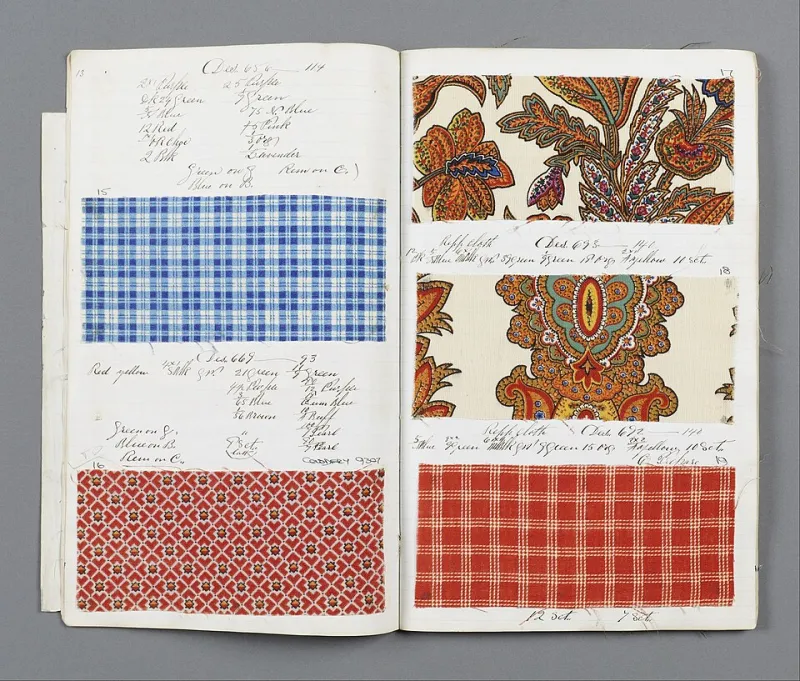
Photo: Old Pacific Print Works Details on Google Art Project, Public domain, via Wikimedia Commons
A Wardrobe Remembers What the Eye Forgets
Most wardrobes are managed by memory, and memory is a poor archivist. A navy that looked distinct under one shop's lighting becomes indistinguishable from three others at home. A favorite trouser is altered to perfection, then the tailor's measurements vanish with the receipt. A coat is repaired in a color that seemed close enough at the time, and the mismatch is discovered only in daylight.
Ateliers do not rely on recollection. They keep swatches, sample labels, and workroom notes because cloth is a material with a history, a weight, and a behavior. The same discipline can be scaled down for a home wardrobe. A swatch drawer, or a simple archive box, is not a decorative exercise. It is a working record of what you own, what you have changed, and what you should avoid buying twice.
For US readers especially, where shopping is often fast and returns are easy, a physical archive introduces a useful pause. It turns fabric knowledge from something theoretical into something personal: this is the cloth I wear, this is how it wears, this is what my tailor did to it.
What Belongs in the Drawer
The drawer does not need to be elaborate. A single shallow box, a set of envelopes, and a pencil are enough to begin. What matters is consistency.
Keep a swatch of every significant garment, cut from an inside seam allowance or hem where it will not show. Two inches square is sufficient. Label it with the garment, the fiber content, the date of purchase, and a brief note about weight or hand. If the garment has a distinctive care label, keep a copy or photograph it and place the note with the swatch. Care labels fade, and they are often the first thing to disappear after alteration.
Keep repair notes as well. If a button is replaced, note the thread color and the source. If a moth hole is darned, record the patch cloth. If a hem is let down, note the original depth. These details are small, but they are the difference between a repair that disappears into the garment and one that announces itself.
Alteration records deserve their own card. Note the tailor, the date, and the specific work performed: shoulder adjustment, sleeve shortening, waist suppression, hem depth, seam allowance left intact. If the garment is later resold or passed on, this record is a form of provenance. If it is altered again, the next tailor has a starting point rather than a guess.
A thread snippet is optional but useful. So is a small photograph of the garment on a hanger, especially for pieces that are stored in another closet or in seasonal rotation. In humid parts of the country, keep the archive dry and away from direct light. In dry climates, dust is the greater enemy; a closed box is sufficient.
The Practical Logic: Avoiding the Second Navy Coat
The most immediate benefit is repetition control. How many times has a wardrobe gained a second brown belt, a third white shirt, or another coat in a shade that duplicates one already hanging upstairs? A swatch drawer makes those duplicates visible.
Before shopping, take the relevant swatches with you. Compare them in daylight, not under store lighting. Notice not only color but weight, sheen, and drape. A swatch of lightweight wool will not behave like a heavy coating, even if the shade is close. This is particularly useful when shopping online, where a screen can flatter a fabric beyond its true character. If the retailer provides a swatch service, order one and add it to the drawer before committing to a garment.
The archive also creates a record of what not to buy. If a cloth pilled after three wears, note it. If a seam finish failed, note it. If a color faded in the wash, note it. Over time, the drawer becomes a private reference library of fabric behavior, more useful than any general guide because it is specific to your life.
A Tailor's Rosetta Stone
Alterations are where a wardrobe becomes individual, and where memory is most often lost. A tailor who knows that a jacket has already been shortened at the sleeve will work differently than one who assumes it is untouched. A record of previous work prevents over-alteration and preserves the garment's proportions.
The drawer should also hold a note on seam allowances. If a garment has generous inlays, it may be let out or lengthened later. If it has been trimmed close, that option is gone. This is the kind of information that is rarely printed on a label but matters enormously when a favorite piece needs adjustment.
For repairs, the archive can hold a small envelope of matching thread or a spare button. It can also record which dry cleaner or repair specialist handled the garment. In the US, where local tailoring talent varies widely by city and town, a record of who did good work is an asset. It saves time, and it protects the garment from repeated experimentation.
Setting Up Without Ceremony
Begin with the clothes you wear most. Pull one garment at a time, cut a swatch from an inside seam, and write the note. A simple index card system works well: one card per garment, with the swatch stapled or enclosed in a glassine envelope. Group cards by category, not by color. Coats, jackets, trousers, shirts, knitwear, and repairs each have different logics.
A digital backup is useful but should not replace the physical swatch. Photograph the card and store it in a folder, but keep the cloth itself. The point is tactile. A screen cannot tell you how a fabric creases or how a dye reads in winter light.
Review the drawer twice a year, perhaps at the change of season. Remove notes for garments that have left the wardrobe. Add new acquisitions. Update repair records. This is not an aesthetic project; it is a maintenance habit, like polishing shoes or airing woolens.
The Point Is Not Nostalgia
A swatch drawer is not a museum. It is a tool for making better decisions in the present. It prevents duplicate purchases, guides future tailoring, and gives repair work a memory. More quietly, it changes the relationship between wearer and cloth. When you keep a record of what you own, you pay attention to how it was made and how it ages.
In a wardrobe culture that often rewards novelty, that attention is a quiet form of resistance. The drawer does not need to be beautiful. It needs to be used.